Diagnosis and Treatment of Testicular Cancer
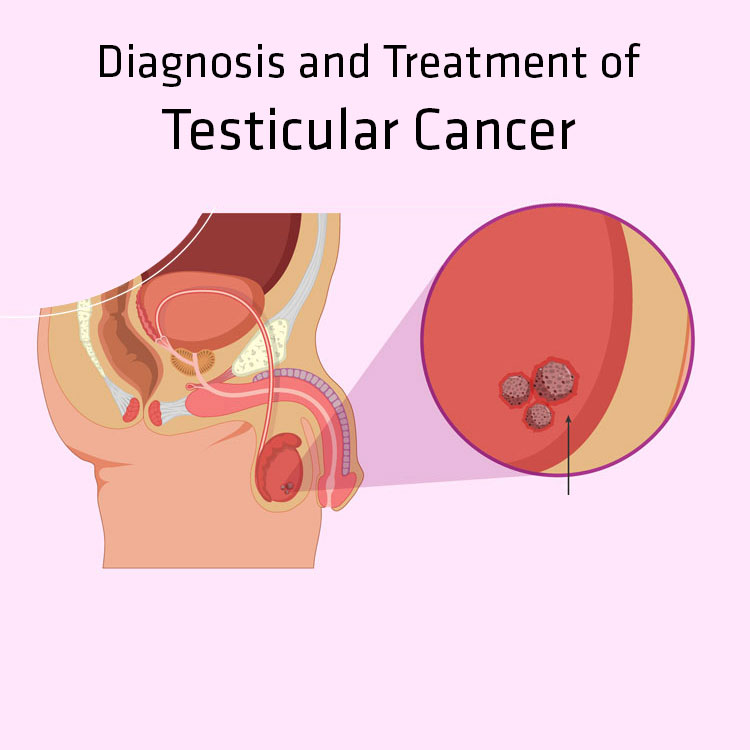
Treatment of Testicular Cancer with Surgery Testicular cancer is one of those diseases that can be easily treated with surgery. This treatment method is possible with different types of surgery, including:
Orchiectomy: Orchiectomy means surgical removal of the testicle.
This method is used for both diagnosis and treatment of testicular cancer.
Orchiectomy confirms the doctor’s diagnosis of cancer and is also the first step in removing the cancerous tumor.
In this method of treating testicular cancer, the surgeon makes a few-centimeter incision in the groin, extracts it, and sends it to a specialized laboratory for anatomopathological examination.
In the laboratory, the type of tumor is determined in terms of benign or malignant, allowing the doctor to ultimately make the most correct decision for the treatment of your testicular cancer based on the type of disease and the type of tumor.
This method takes from half an hour to an hour and a half.
It is performed under general anesthesia or spinal anesthesia (local anesthesia).
If the patient wishes, during the same operation, the surgeon replaces the removed testicle with a silicone prosthesis.
Surgery to treat testicular cancer is usually performed without any specific complications and in some cases the patient may experience some pain that can be prevented and treated with painkillers.
If an infection develops at the incision site, wound healing may be delayed.
The dressing should be left on for a few days and two to three days of rest are recommended for good healing.
Regarding sexual function, removal of the testicle does not change erection or ejaculation, it is not affected.
On the other hand, in rare cases where both testicles are removed, testosterone deficiency must be compensated for with hormone replacement therapy.
Treatment of testicular cancer with chemotherapy
Depending on the nature of the tumor and its stage, treatment of testicular cancer with chemotherapy may be performed after orchiectomy to reduce the risk of testicular cancer recurrence.
They are often given for advanced forms, when the cells have begun to spread in the patient’s body.
The doctor chooses a combination of drugs that all aim to destroy the tumor cells in distinct ways.
These drugs are given on a strict schedule, often as an infusion.
To prevent excessive holes in the veins, a catheter can be placed at the injection site, which is often at the level of the collarbone.
Treatments are generally given in cycles, with one week of treatment followed by three weeks of rest.
Testicular cancer develops in one of the glands in the male body, known as the testicles.
Although the disorder can affect men or boys of all ages, it most often occurs in men between the ages of 15 and 44.
Testicular cancer is a relatively rare and completely treatable disorder.
With early diagnosis, testicular cancer can be treated.
Most men with testicular cancer will need surgery.
The type of surgery usually depends on the stage of the cancer and how it responds to treatment.
When the doctor decides to perform surgery, he or she will consider other factors such as the tumor marker level and the pain of men who are planning to have children.
Testicular tumor:
Testicular tumor is one of the most common male diseases of today, which is unfortunately seen in many cases among men aged 25 to 34.
Cancer is one of the diseases that even hearing its name is unpleasant and hurts the human psyche.
But the important point is that we should know that all types of this disease may affect any part of our body at any age.
What is testicular cancer?
In general, the abnormal growth of cells in the body that creates a mass of cells is called cancer, and as the name suggests, testicular cancer or testicular tumor is called abnormal growth in testicular cells.
Testicular tumors are tumors that only account for 1 to 2 percent of malignant tumors in men, but their importance is that they affect young men in most cases.
These tumors usually develop on the right side of the body more than on the left side, and in very rare cases, they may occur in both testicles.
Cause of testicular tumor:
Doctors are still not exactly sure why testicular tumors develop in men, but there are factors that can increase the risk of this disease.
These factors include congenital factors and environmental factors.
Cryptorchidism, or failure of the testicle to descend into its natural place in the scrotum, is one of the most important factors.
This is important because the temperature of the scrotum is about 1 degree Celsius lower than body temperature, and the sensitive sperm-producing cells are kept at a cooler temperature.
If the testicles were inside the abdomen, in addition to the loss of sperm-producing cells and infertility, the cells would change and cancer would develop.
Other contributing factors include white race, a family history of testicular tumors, and high-risk jobs such as mining and firefighting.
Lyme testicular tumor:
When in the early stages of testicular cancer, cancer cells are limited to this part of the body and have not yet spread to other tissues, the disease manifests itself with enlarged testicles, a mass in the testicle, or testicular pain. However, when the disease progresses and the tumor spreads to other parts of the body, other symptoms such as back pain, lower abdominal pain, testicular pain and discomfort, and swelling of the legs are also observed in the patient.
Is every lump in the testicle cancer?
Testicular cancer is a disease that can affect young people and even teenagers. The age group at risk for this disease includes men between 15 and 35 years old. Although this cancer is common among young men, it is considered a rare cancer that men usually discover by accident.
For this reason, it is necessary for everyone, including women, to be aware of this cancer and recognize its symptoms.
What are the symptoms of testicular cancer?
The most common symptoms of testicular cancer include the following:
Formation of a lump or swelling in the scrotum, which can be accompanied by pain
Feeling of a dull ache or pressure in the lower abdomen and groin
Back pain
Feeling of heaviness in the scrotum
Formation of a bump on the testicle
Enlargement of the size of one of the testicles
Sudden accumulation of fluid inside the scrotum
Feeling of pain or discomfort in one of the testicles or in the scrotum
What causes testicular lumps?
The formation of a lump in the testicle can have various causes, the most important of which are:
Varicocele
Hydrocele
Testicular cyst or spermatocele
Infection
Testicular torsion
Hernia
Epididymitis and orchitis
Testicular cancer
As we have seen, the formation of a lump in the testicle has various causes, and not all of them are due to testicular cancer.
Should we consider every lump as cancer?
Fortunately, most of these testicular lumps are benign and non-cancerous and resolve on their own without the need for treatment, but it should be noted that monitoring the lump and swelling by a doctor is essential.
So it is necessary to see a doctor after observing anything unusual.
Some doctors believe that any painless swelling of the testicle should be considered cancer unless it is proven to be non-cancerous.
Their reason is the importance of this cancer because it grows quickly.
How is testicular cancer diagnosed?
Usually, men discover testicular cancer by accident or the doctor notices it during a physical examination.
The doctor usually uses blood tests and imaging of the testicles with ultrasound or CT scan to make a more accurate diagnosis.